Gas Kiln Launch – An Introduction to Reduction Firing
We’re really excited to announce the upcoming launch of Reduction Firing workshops across our London studios. Our technician teams have been hard at work behind the scenes mixing, tinkering, and testing, and we’re finally ready to light the fire with our studio members. More workshop details will follow soon — keep an eye on our Instagram, website, and your regular studio newsletters.
Ahead of the launch, we thought we’d write a little introduction to the Reduction firing process and our new lineup of Reduction glazes. We’ll be offering seven new glazes for members to use, but first, let’s get into why Reduction firing is so special.
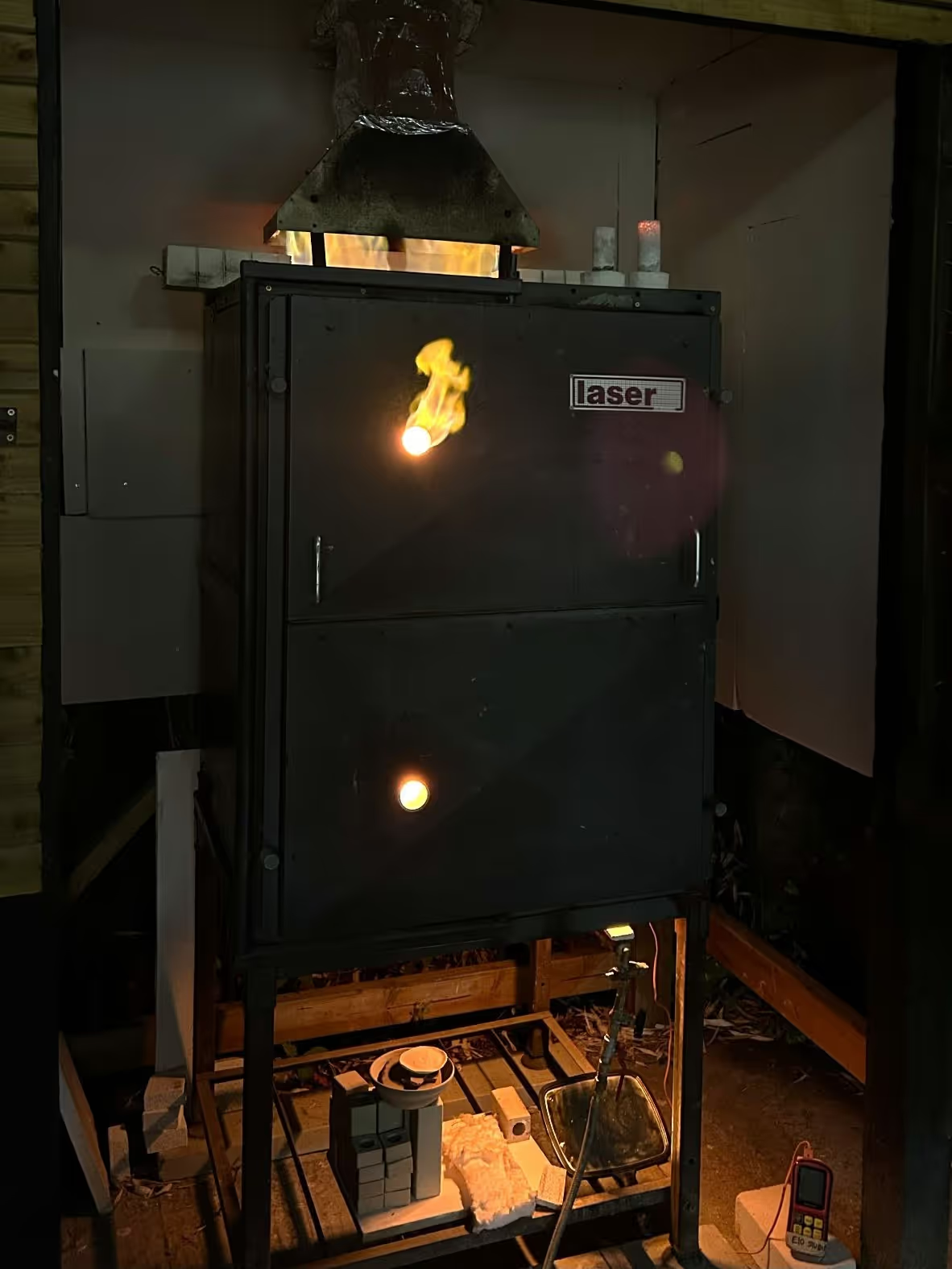
What is Reduction firing, and how is it different from our regular studio firings?
Reduction firing is a kiln firing process that limits the amount of oxygen available inside the kiln, affecting the chemical reactions that take place within glazes and clay bodies as they mature in the heat. This creates a distinct range of effects and colours that can only be achieved through this process — and it’s what makes Reduction firing so desirable.
Reduction firing originated with wood-fired kilns and has existed for thousands of years. The process is initiated by carefully controlling the combustion of fuel in the kiln, alongside physically restricting airflow. Modern gas kilns (like the ones at our studios) were later developed to replicate wood firing on a quicker, smaller scale, with far greater control over the firing chamber.
Reduction kilns are typically heated using naked flames, which flow through the space and interact directly with the ware, leaving their mark on individual pieces and making every pot truly unique. If you’ve ever taken part in one of our Raku firing workshops, you’ve already encountered Reduction firing — it’s what gives some of our Raku glazes their distinctive metallic sheen.
In our usual studio firings, we use a process called Oxidation firing. This means that oxygen is not restricted and can freely enter the kiln chamber throughout the firing. As a result, different chemical reactions occur within the clay bodies and glazes as they mature. Oxidation firing can be done using wood or gas, but most commonly it’s achieved using electric kilns heated by metal coils called elements.
While Reduction firings are dynamic and unpredictable, Oxidation firings are stable, consistent, and tend to produce very reliable results.
Glazes
Reduction firings in gas kilns typically reach higher temperatures — usually around Cone 10 (1280–1310°C). In comparison, our standard electric firings are Cone 8 (around 1230–1250°C). The higher temperature combined with a Reduction atmosphere allows for some truly beautiful glaze effects, which we’re excited for everyone to explore with our new lineup.
The roster consists of six classic glazes with long histories and traditions, alongside one contemporary green.
Jade Celadon
Celadon glazes are among the oldest glazes in the world, originating in China during the Shang (1600–1046 BC) and Zhou (1046–256 BC) dynasties. Early Chinese potters experimented with iron-rich liquid clay ‘slips’, and with the development of high-firing kiln technology, standardised ‘official’ Celadon wares emerged during the Han dynasty (25–220 AD).
Although Celadon is often associated with soft blue-green tones, these glazes actually range from white and amber to teal, olive, jade, and dark brown. This variation comes from differing levels of iron within the glaze.
Jade-coloured Celadon was particularly prized for its resemblance to green jade — a stone of immense cultural importance in East Asia. Longquan Celadon from China is especially renowned for its rich green tones and exquisitely carved forms. During the Goryeo Dynasty, Korean potters developed their own distinctive Celadon stoneware, characterised by complex inlay designs using iron and porcelain slips, alongside intricate sculptural detailing.
The modern term ‘Celadon’ is thought to have originated in 17th-century France, inspired by the character Céladon from L’Astrée by Honoré d’Urfé (1627), whose soft green ribbons reminded European collectors of the glazes seen in East Asian ceramics.
Chun
Jun ware, also known as ‘Chun’ ware, developed from earlier Celadons and dates back over a thousand years to the Northern Song Dynasty (960–1127). The name refers to Junzhou prefecture in Henan, China, where the glaze originated.
Chun glazes are known for their thick, opalescent pale blue surfaces. Historically, they were formulated to encourage a phenomenon called phase separation, where intricate layers of glass and tiny pockets of air form within the glaze. The opalescence comes not from blue pigments, but from light interacting with these glass layers.
Chinese potters also experimented with splashing copper oxides onto Chun glazes, producing vibrant purples and magentas across the surface.
Oxblood Red
Oxblood red glazes are a classic example of the unique effects made possible through Reduction firing. In most modern glazes, copper oxides produce green. However, in an oxygen-starved Reduction atmosphere, copper turns red — earning these glazes the name ‘Copper Reds’.
Oxblood reds are especially prized because they are virtually the only way to achieve deep, rich reds in high-fire ceramics. Originating in the late Tang Dynasty (618–907 AD), these luxurious blood-red wares were highly valued for use in Imperial ceremonies.
Oxblood glazes are distinct from earthenware reds, which historically relied on highly toxic Cadmium and Lead (just to be clear — none of our studio glazes contain Cadmium or Lead).
‘Koi’ Crackle
Crackle glazes were first embraced as an aesthetic feature during the Northern Song Dynasty (960–1127 AD), particularly on Ru, Guan, and Ge wares. Chinese potters refined glaze recipes to produce crackle patterns of varying depths, often referred to as ‘gold and iron threads’.
Also known as ‘Ice crackle’ or ‘Fish scale crackle’, these glazes highlight the intentional misfit between glaze and clay body, creating intricate networks of crackle across the surface. The patterns form as the glaze expands and contracts during firing, producing both horizontal and vertical lines throughout the glaze layer.
Achieving this effect requires a specific glaze thickness, which can make application particularly challenging.
True Tenmoku
Tenmoku glazes are named after Mount Tianmu (translated as ‘Heaven’s Eye’), pronounced ‘Tenmoku’ in Japanese. Buddhist monks at the Tianmu monastery drank tea from Jian ware bowls glazed with iron-rich glazes. These bowls later travelled to Japan, where their streaking, crystallisation, and oil-spot effects resonated deeply with the Wabi Sabi aesthetic of Japanese tea culture.
Japanese potters went on to develop their own Tenmoku glazes to suit local tastes. In the UK, Hamada Shoji and Bernard Leach both popularised dark brown-black Tenmoku glazes through their studio pottery work.
Traditional Shino
The pursuit of Wabi Sabi aesthetics also led to the development of Shino glazes. Shino is famously temperamental and highly responsive to flame movement during firing. This unpredictability — and the beauty it creates — is precisely what made Shino glazes so valued by tea practitioners in Japan.
Shino glazes originated in the Mino region during the Momoyama period, but early techniques were lost until potter and researcher Arakawa Toyozo rediscovered ancient kiln sites in the area. He became the first modern potter to successfully recreate true Shino and Oribe glazes of the 16th century, and is now recognised as a National Living Treasure.
Reitz Green
Finally, Reitz Green is a contemporary glaze that ranges from deep forest green to grey-black, with a silky, semi-matte finish. Developed by Don Reitz — a prominent American potter and educator — this glaze emerged from his experimentation with Cobalt Carbonate and atmospheric firing.
Although Cobalt is best known for producing blues, in a specific chemical composition and at higher firing temperatures it can produce rich greens. This makes Reitz Green a truly distinctive glaze, unlike any other in our lineup.

.avif)