Children's Pottery Classes

A seven-week pottery course for ages 11 and up. Wheel throwing, hand-building, and glazing in small groups with experienced teachers, in our open-access studios. No experience needed.

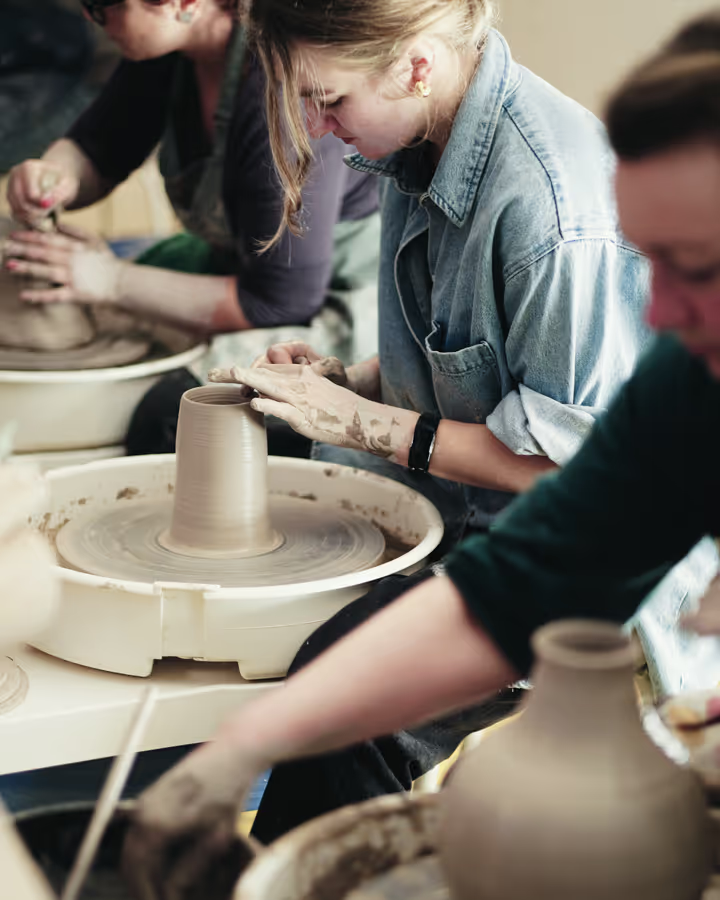
A young woman with braided hair shaping clay on a pottery wheel in a pottery class
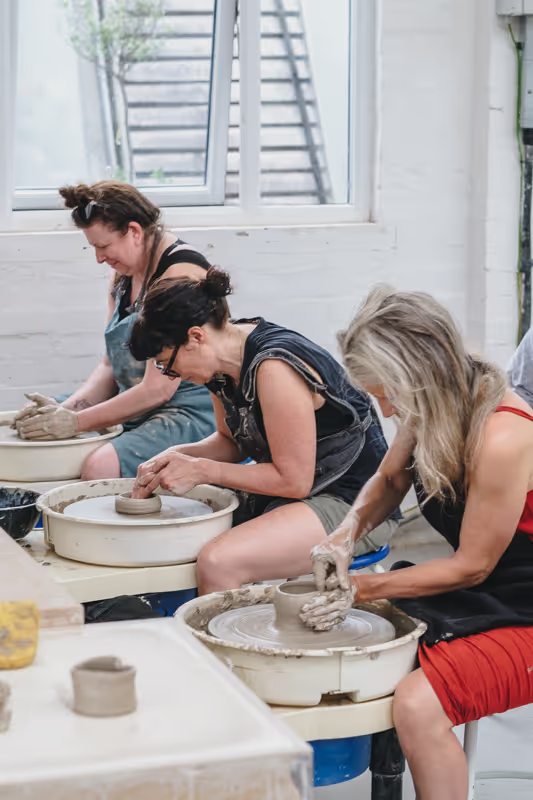
Three people shaping clay on pottery wheels in a ceramics class
Handmade ceramic pots crafted at Turning Earth pottery studio in London

2 hours

Each lesson

inc. cleanup time

12 students

Per teacher

per session

7 weeks

Course length

one session per week

£240

Price from

per course

Ages 11+

Experience

no experience needed

As featured in

British Vogue

Elle Decoration

Time Out

BBC

ITV

Evening Standard

Ceramic Review

What to expect

Junior courses use the same clay, the same wheels, and the same kilns as our adult classes. The session length is shorter, two hours instead of three, and the teaching is adapted for the age group.

Tuition, clay, glazes, and tools are all included. Firing is the only thing charged separately, at £2.50 per 500g. They don't need to bring anything, but wear something they don't mind getting clay on.

Over seven weeks, they'll learn both hand-building and wheel throwing, and glaze their finished pieces. Most are surprised by how much they make, and by how absorbing real ceramics work can be.

Person shaping clay on a pottery wheel using a metal tool.

What they'll learn

The course starts with hand-building: pinching, coiling, and slab work. These are the foundations of making with clay. Most kids leave their first session with something they've made.

From there, they'll move onto the potter's wheel. Learning to centre clay and throw basic forms takes patience, but kids often pick it up faster than adults. The tutor works with each student individually at the pace that suits them.

The final sessions are dedicated to glazing. They'll choose from a selection of our studio glazes and learn how to apply them. We fire the pieces they want to keep, and the finished work is ready to collect two to three weeks after the course ends.

They'll leave with practical ceramic skills and a collection of pieces they've made themselves.

Techniques covered

Pinching

Coiling

Slab building

Wheel throwing

Trimming

Surface decoration

Glaze application

Wedging & clay prep

Arriving on time

Please arrive 10 minutes early.

Each session opens with foundational techniques that everything else builds on. It's hard to catch up if you've missed that groundwork, and disruptive to others once the class is underway.

1

What to bring

An apron, old shoes, pen & paper, a towel.

An apron (synthetic is better than cotton, as it traps less clay dust). Shoes you don't mind getting earthy. A pen and paper for notes, as there's a lot to absorb in the early weeks. A small towel for drying your hands between steps. Clay, glazes, and equipment are all provided. If you booked with the starter toolkit, your tools will be waiting for you. If not, you'll need to bring your own.

2

Clay dust and your health

A genuine concern, not studio fussiness.

Long-term exposure to clay dust can cause silicosis, a serious lung condition. We ask everyone to wipe their work area with a damp sponge throughout the session and mop the floor around their space at the end. Clearing up is part of the session, not an afterthought.

3

Attending your sessions

Get the dates in your calendar before you book.

Please carefully check all the class dates on the course to make sure that you are able to attend all your lessons. Unfortunately, it is not possible to reschedule any missed lessons or join lessons on another course. Our classes run at full capacity and on different lesson schedules.

4

Firing and collecting

Work must enter the queue 3 weeks before your final session.

We fire your pots as they're ready, but the process takes time. Pieces made after the 3-week cutoff can be taken home as bisque (structurally hardened but unglazed). There's a small charge per piece: £2.50 per 500g of unfired clay, paid by card. Finished pieces are available roughly 2 weeks after your final session. We hold student pots for 1 month after the final lesson. Please make sure you collect them before then.

5

If this is your first time

Most people are a little nervous. That's normal.

You won't be the only one. Our instructors are used to working with complete beginners, and there's no performance involved. Just clay, time, and a room full of people in the same position as you. Long hair needs tying back, and long nails will make wheel-throwing noticeably harder.

6

Book a children's class

No dates for this course right now

New dates are released regularly. Leave your email and we'll tell you the moment the next one is announced.

Thank you! Your submission has been received!
Oops! Something went wrong while submitting the form.

No spam. Just new dates, roughly once a month.

Looking for something sooner?

View all classes

Get notified when new class dates are released

Just new dates, roughly once a month.

Please enter a valid email address.

Frequently asked questions

Practical questions about junior courses, age ranges, and what to expect.

What age range is this for?

Ages 11 and up. The course works with the same wheels and kilns as our adult classes, and we've found 11 to be the age where most kids have the hand strength and coordination to work safely with both. If your child is older and confident with their hands, they'll be in the right place.

Do they need any experience?

No. Most students arrive having never worked with clay. The course starts from the basics, and tutors set more advanced challenges within the session for kids who've done some pottery before.

Do parents stay during the class?

Parents are welcome to drop off and collect. The studio isn't set up for parents to observe during the session. There are plenty of cafes nearby if you'd like to wait locally.

What's included in the price?

Tuition, clay, glazes, and use of studio equipment are included. Firing is the only thing charged separately, at £2.50 per 500g.

What should they wear?

Clothes they don't mind getting clay on. It washes out of most fabrics, but lighter colours can pick up stains. Closed-toe shoes are sensible because studio floors get wet and tools occasionally get dropped. We have aprons at every studio, so they don't need to bring one.

How many children are in a class?

Twelve students per teacher. That's the upper end where one teacher can still give everyone individual attention across a two-hour session.

Will they actually make something they can keep?

Yes. Over the course they'll make several pieces, from hand-built bowls and cups to thrown forms. At the end of the course you choose which pieces to keep, and we glaze and fire them. Finished work is ready to collect two to three weeks after the final session.

Can I buy this as a gift?

Yes. Our gift vouchers cover any course and are valid for twelve months. The recipient picks their own dates and location. You can also book a specific class for someone by entering their details as the attendee. Tasters are one of our most popular gifts.

Is there parking at the studios?

No parking at any of our locations. There's limited street parking nearby, and Leyton has a car park at the roundabout. Public transport is usually easier. Each location page has full directions.

Can I get a refund if they can't make it?

Once booked, fees are non-refundable. If your child can't attend a session, get in touch as early as you can and we'll try to fit them into another class.

Can they do another course afterwards?

Yes. Plenty of students come back for a second or third course. The tutor adapts the content for returning students, with more advanced techniques layered into the same session structure.

Students working on ceramics at a Turning Earth studio table

Know someone who’d love this?

Our gift vouchers cover any of our courses, from a single taster session to a full twelve-week programme. The recipient picks their own class and dates, with twelve months to use it.

Ceramics is one of those things people have always meant to try. A voucher gives them an actual occasion to start. Because there's no fixed date on the gift itself, they can find a week that genuinely works rather than scrambling round a pre-booked slot.

Vouchers are sent by email immediately after purchase. If you'd rather gift a specific course on a specific date, you can do that directly through the course pages instead.

Buy a gift voucher