turning earth CLASSES

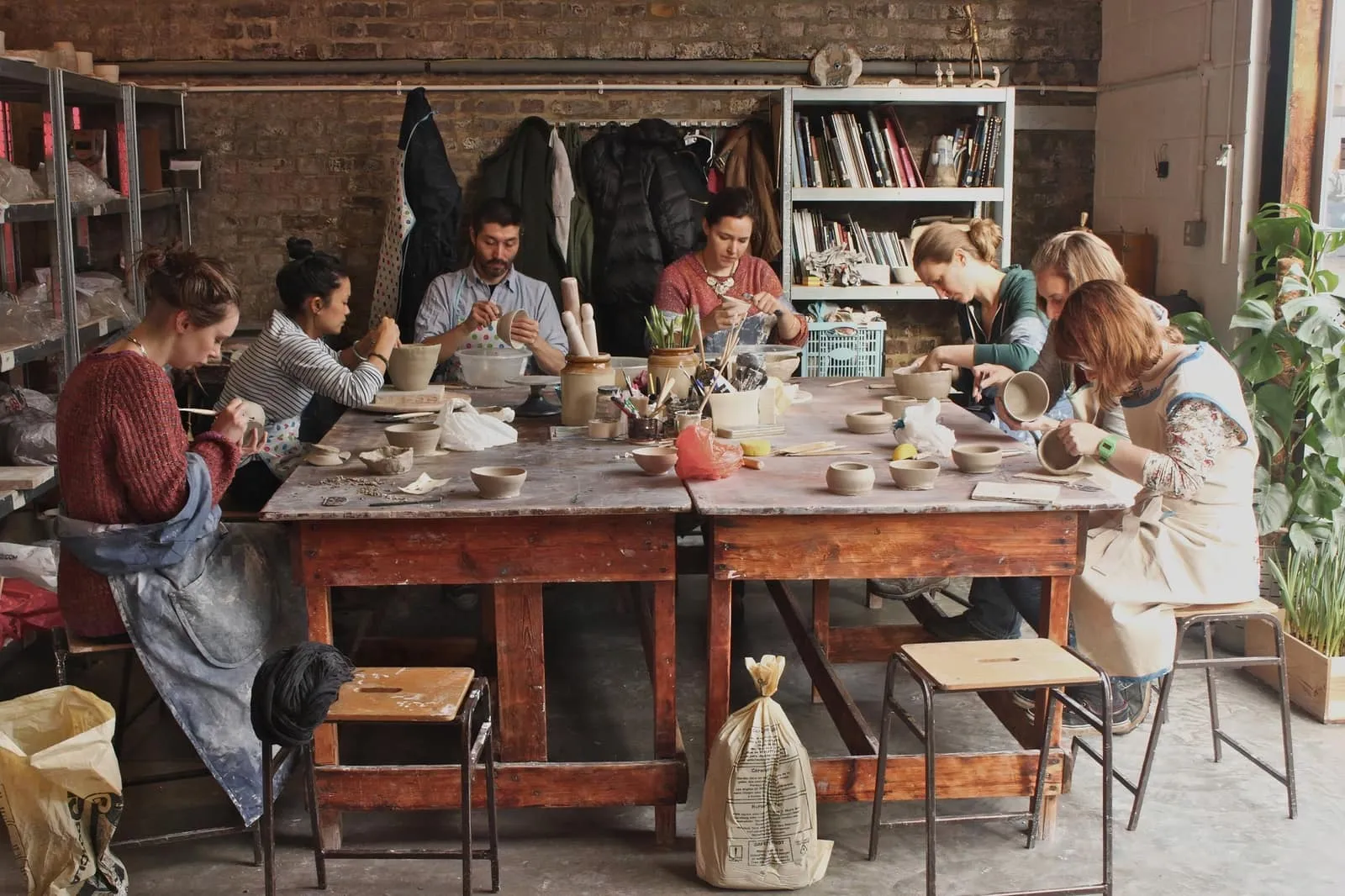
Turning Earth offers a range of learning opportunities, including weekly classes at set times and week-long immersion courses. We have options for people at every level of experience: courses for beginners, courses for intermediates, general classes, and specialist classes in a range of disciplines, including wheel throwing.
Click on the links to the studios to see what's available near you.

What do you learn in a beginner pottery class?

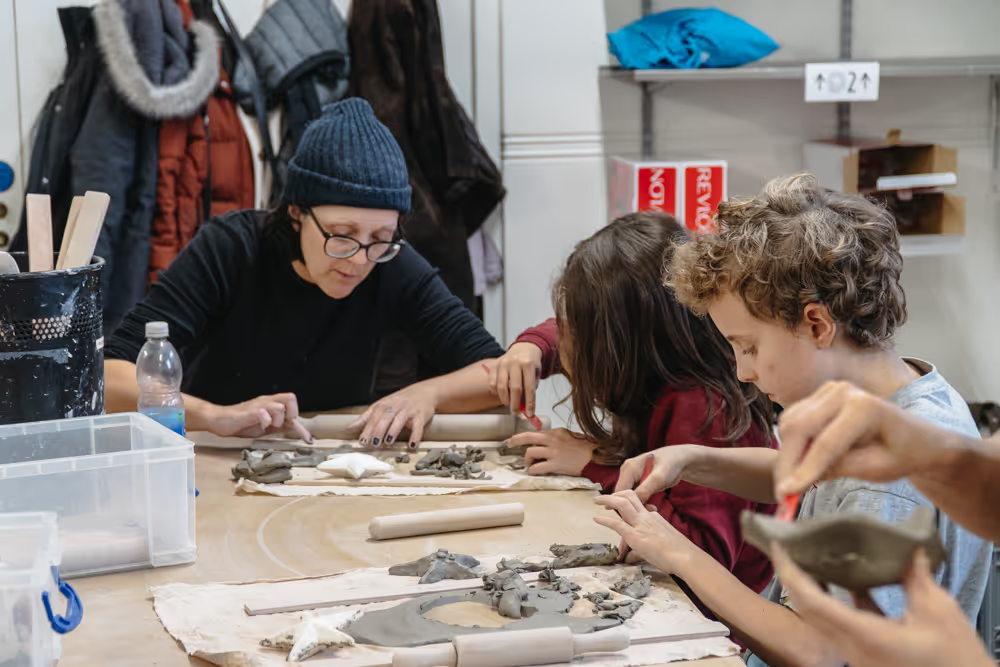
Making ceramics is a hands-on, multi-step process. When you join an introductory or 12-week course at Turning Earth, your time is shared between the potter's wheel and hand-building techniques to give you a well-rounded feel for the clay.

Your teacher will guide you through the reality of studio life, starting with the absolute fundamentals. First, you will learn how to properly wedge and prepare the clay before shaping it. From there, you will get comfortable with foundational hand-building techniques like pinching, coiling, and slab-building. You will also spend time figuring out how to center clay on the potter's wheel and pull it into functional shapes like bowls and cylinders.

You will be learning directly from passionate, practicing ceramic artists who bring their real-world making experience right into the classroom. Ultimately, completing a 12-week course or a week-long intensive gives you the exact technical and safety knowledge you need to join our open-access studio as an independent member. Be sure to check our FAQ below for details on how current students can get a discount on their first membership subscription!

What are the stages of firing and glazing pottery?

We design our courses to give you the space and support you need to actually practice the craft, rather than just rushing through a project. Sessions run for a full three hours, giving you ample time for instruction, making, and proper clean-up. We also cap groups at 12 students per teacher so you get plenty of one-on-one help.

Transforming wet clay into a finished, usable piece takes time and patience. After you form your piece, it needs to dry slowly. It will reach a "leather hard" stage, which is perfect for carving or adding handles, before becoming completely "bone dry."

How are Turning Earth classes structured?

Next comes the bisque fire. Your teacher will load your bone-dry pots into the kiln, firing them to roughly 1,000°C. They come out as porous "biscuit" ware, ready to absorb color. Then, you get to choose from our wide selection of studio glazes and apply them to your pieces. Finally, your work goes back into the kiln for the final glaze fire at an even higher temperature, melting the glaze into a solid glass surface. To be kind to the environment and reduce landfill waste, we only fire the pieces you genuinely love and want to take home!

Is pottery hard to learn?

Pottery is a skill that is easy to begin but takes patience to master. While the fundamentals can be grasped relatively quickly, developing the muscle memory required for the craft is a gradual and meditative process. It is less about natural-born talent and more about showing up and becoming familiar with the way clay moves under your hands.

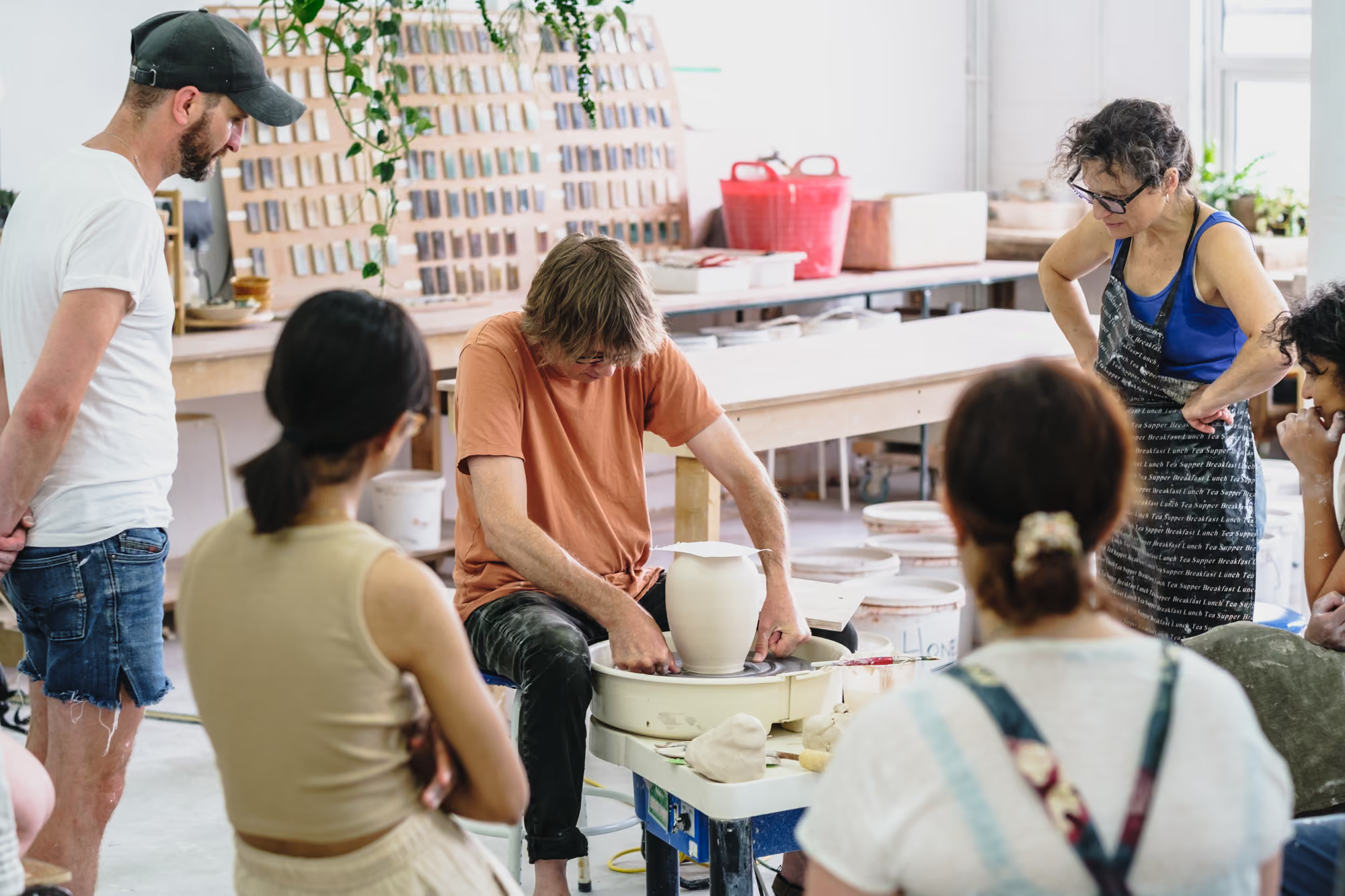
To make the learning curve more natural, we focus on the physics of the material. You will learn how to use your body weight and posture to brace the clay rather than relying on raw arm strength. We start with the essential milestone of centering, which is the foundation of all wheel work, before moving on to opening the clay and pulling the walls. Because unfired clay can be infinitely recycled in our studios, there is no pressure to produce something perfect right away. Our aim is to help you value the practice of making as much as the finished pieces you eventually take home.

Pottery classes we offer

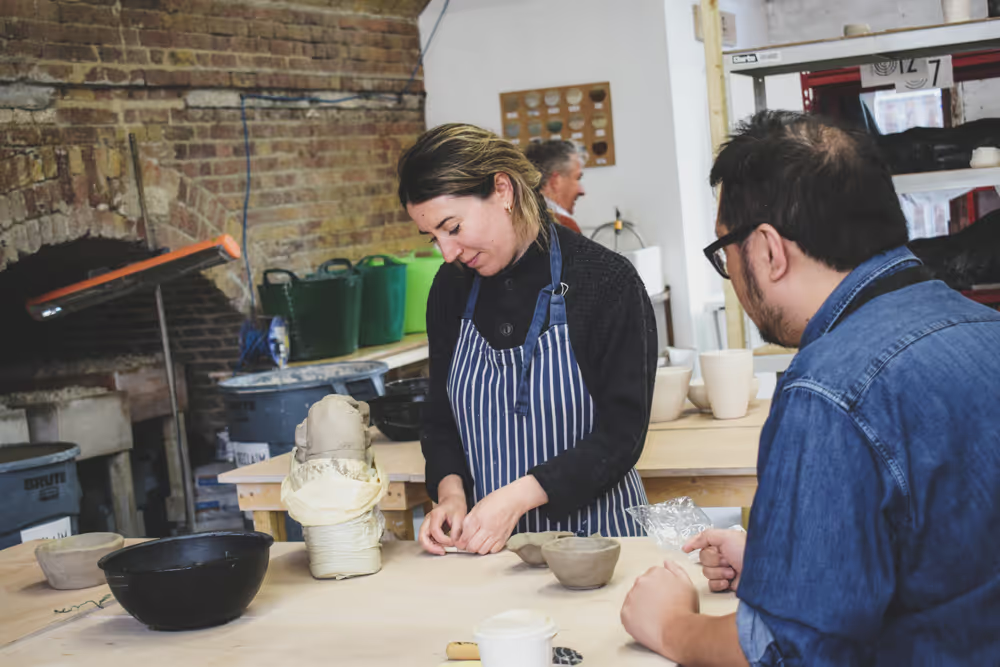
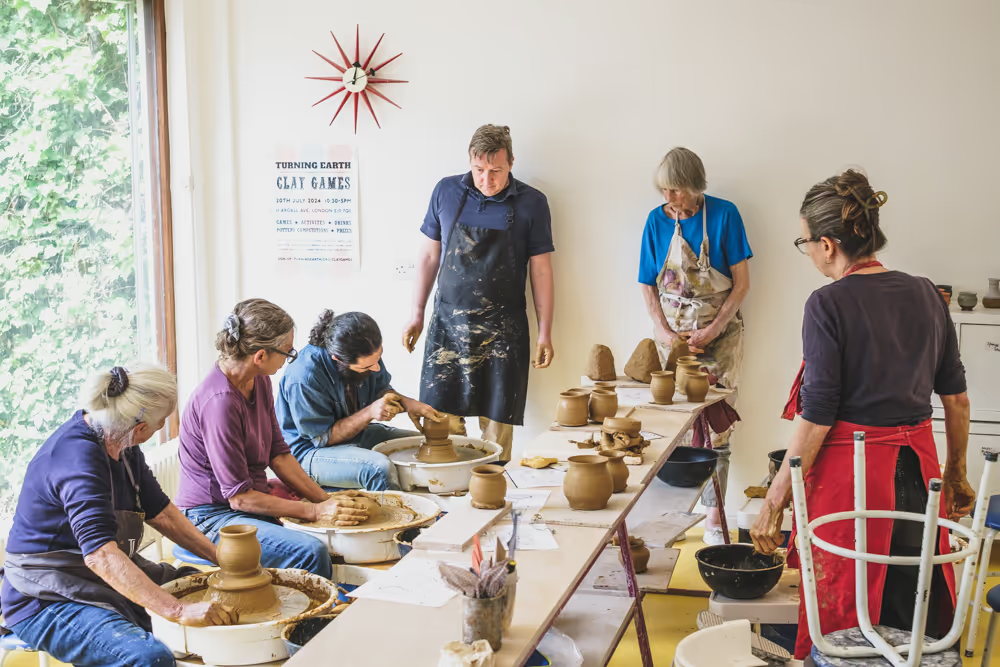
In a ceramics class, a teacher demonstrates pottery techniques to a student, both women wearing aprons.

Turning Earth teachers

Turning Earth classes are all taught by passionate ceramic artists who also make and sell their own work. Many of them have followed the Turning Earth route into a making career - beginning as members in our studios and slowly progressing to selling their work and often opening their own studios.

They have all studied and worked on their own practice extensively before training as teachers through the Turning Earth studio system, and shadowed and assisted other instructors before becoming lead teacher in their own classes. All teachers are well-versed in the Turning Earth curriculum, and each will have personalised the course to reflect their own strengths and making styles.

Frequently asked questions

How much work can I expect to make on a course?

The main objective of our courses is to teach you how to make ceramics well and help you practise and develop your technique, rather than to make as many pots as possible. We do rather see our students take home a few pieces they’re really proud of and that show off their development in skills, than producing as much as possible.

How many finished pieces you can expect to take home depends entirely on the individual’s skills and artistic vision. While some students enjoy the process and speed that can be achieved with throwing on the wheel, others enjoy the meditative process of making detailed and sculptural work.

Our 12-week courses are our most popular courses as they offer a great balance between learning technique and getting your practice in. Our shorter courses (with exception of our Intensive Courses) are condensed and you’ll have less time to get practising and making than you’ll have on a full 12-week course.

Can I bring my own clay or glazes to my class?

You can not bring your own clay, glazes or other ceramic materials to our classes. If you are keen to experiment with other clays or glazes, we recommend joining our studios as a member which will give you the opportunity to experiment more. Note that it is not possible to use Terracotta or other Earthenware in any of our studios.

Can I take a class just for wheel throwing?

Yes, we offer dedicated "Wheel Throwing Only" courses! For our standard introduction and 12-week courses, however, class time is shared between the wheel and hand-building. This ensures every student gets a well-rounded foundation in both essential pottery techniques.

What is included in the pottery class fee, and what do I need to bring?

To keep upfront costs low and encourage eco-friendly making, clay and firing are charged separately based only on what you choose to keep. Here is exactly how materials work and what you should pack for studio days:

  • Firing Costs: Firing is charged at £5 per kg of finished, fired pottery (an average mug costs about £2).
  • Glazes: All studio glazes are completely included in your firing fee.
  • Pottery Tools: You can bring your own, or purchase a basic 8-piece starter toolkit from us at the studio for £5.
  • A Clean Apron: You will need to bring your own apron, and it must be washed regularly! Dirty aprons spread clay dust, which is a health hazard for everyone. We highly recommend non-natural fabrics, as they trap dust more easily.
  • Sensible Clothing: Pottery gets quite messy, so please wear comfortable clothes and shoes that you don't mind getting dirty.

What previous experience do I need to join an intermediate course?

Our intermediate throwing course is aimed at potters who are confident at all the basic throwing techniques such as wedging, centering, making cylinders, making bowls and trimming as these techniques will not be covered in the course. The course focuses on advanced techniques such as throwing larger pieces, lidded jars, teapots, throwing off the hump etc.

Can I buy a gift voucher for a class?

Gifting a pottery class is a simple way to share the experience of working with clay. Our digital vouchers are available to purchase through our gift vouchers page and can be redeemed for any course at our Hoxton, Leyton, or Highgate studios. Once purchased, the voucher is sent via email and the recipient can use it to book the timing that suits them best.

What payment options do you accept?

We accept all major credit and debit cards. We also offer flexible payment options through Klarna.

With Klarna, you can:
Pay Now: Complete your purchase immediately using your card or bank account.
Pay Later: Try before you buy and pay up to 30 days later.
Pay Over Time: Split your purchase into manageable interest-free installments.*

*Payment options through Klarna are subject to eligibility. Learn more about Klarna here.

How do I transition from pottery classes to an open-studio membership?

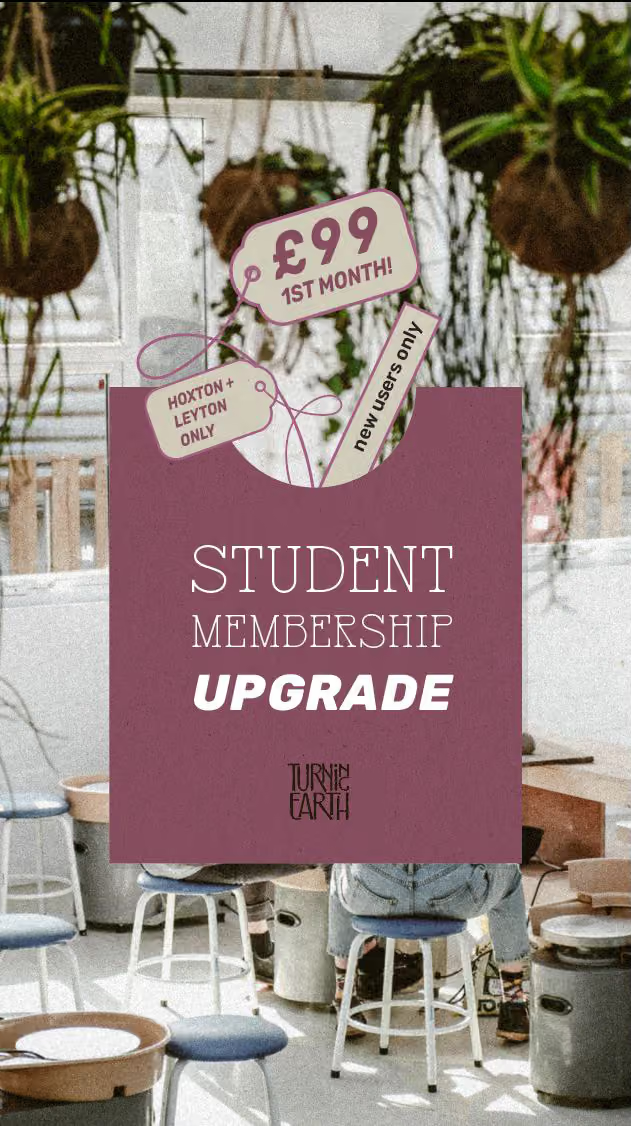
Completing a 12-week course or a week-long intensive gives you the technical and safety grounding needed to join us as an independent member. To help with that transition, we offer an Accelerated Learning Package (ALP), which is a one-time £100 discount off your first month of membership (or any upfront subscription longer than three months).

The essential rules for the ALP:

  • Qualifying Courses: You must be currently enrolled in an 8-week, 12-week, or intensive course. (Taster and introductory classes are not eligible).
  • Eligible Studios: This offer is valid at our Leyton and Hoxton studios only; it is not available for Highgate.
  • Timing: Your membership must start within one month of your course ending.

I’ve booked a place on a course, but can no longer make it. Can I get a refund?

Once a place has been booked, the fees are non-refundable. However, if we are still able to sell your place to another student before the course starts, we’ll be happy to swap your place over and refund your fees. We’ll do our best, though you’ll understand we can’t make any promises.

I missed one class. Can I do an extra lesson to catch up?

On most courses, you should be able to catch up in your next lesson. The first few and last few lessons are the most crucial lessons as that’s when you’ll learn how to get started and when you’ll finish your projects. It is important not to miss these. It is not possible to catch up on a class or sit in on a lesson on a different course. To make sure that you make the most of your course, it is very important that you make sure that you can make all the class dates before you sign up to a course.

I finished my course. When can I collect my finished pots?

You should wait at least 2 weeks after your last lesson before coming to collect your class pots. Please note that you won’t receive an email from our team when your work will be ready to collect. You’ll have to collect your work within 2 months of ending your course. Our studios are busy with a continuous stream of new students and we do not have the space to store your pots for any longer than that.

I have no previous experience in pottery. Which courses are best suited for me?

All our courses, with the exception of those advertised as ‘intermediate’, are suitable for students of all levels. You don’t need any previous experience of ceramics to join the course and get stuck in. We do get many students who do our courses more than once - while they have the basic skills, they use the course to refine their technique and get some more practice under the guidance of a teacher. And of course there is the social aspect of being part of a group and learning together.

More info available in our full Student FAQ

What our students say

Hear from some of our amazing customers

I absolutely loved this course - Linda created such an interesting, relaxing and open environment which catered to all abilities. Honestly, absolutely fabulous! Best week ever. 

Daisy

Simona was such a wonderful teacher. She managed the class so well and made sure to take time to assist everyone and answer all our questions. She was very patient and so friendly  and generally just so positive. It made for such a warm and happy environment. 

Lauren

Thank you to Linda for her patient, skilled demonstrations and teaching. I also wanted to add that she does a great job in creating a welcoming, supportive environment (as does the staff as a whole). This makes a difference not only to the pottery work/creativity, but has helped me and others too when going through a hard time. It is greatly appreciated.

Lain

Have thoroughly enjoyed the whole course and would recommend to anyone who would like to give it a go! Thank you so much : )

Jake

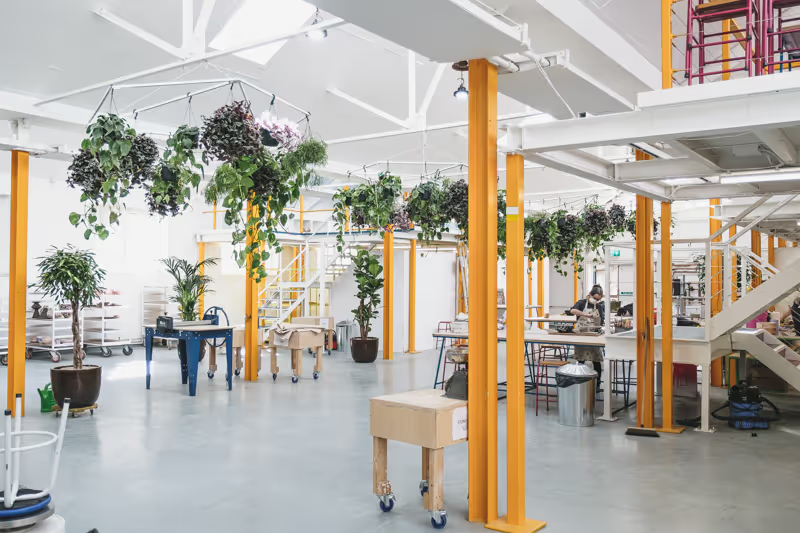
The studio space/learning hub at the Leyton studio is great, lots of space and light. Linda was an amazing teacher, who took the time to thoroughly explain things and fully encouraged creativity.

Sian